
uPVC vs aluminium windows: which should you recommend for your customer’s home?
21st July 2026
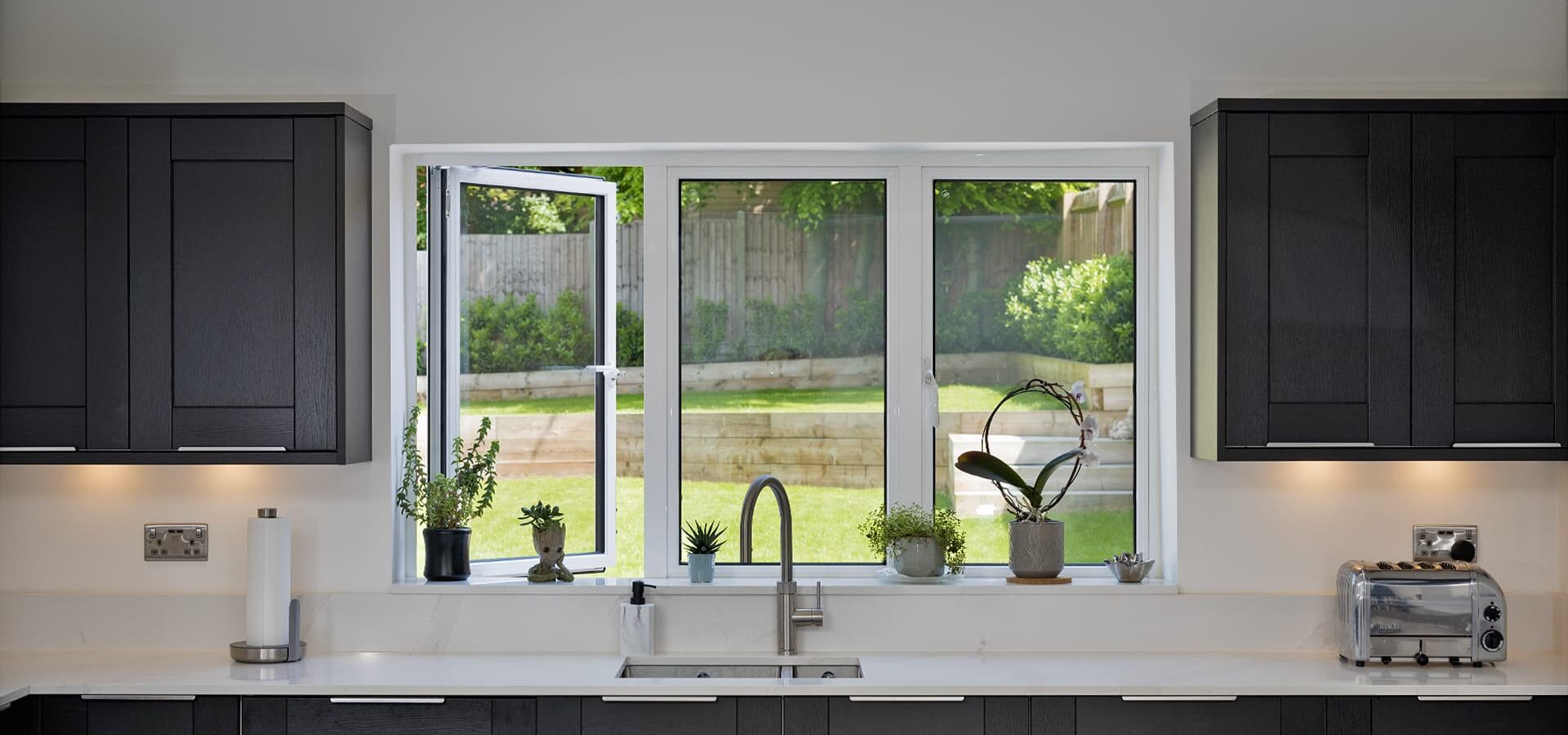
Summary: uPVC is the right recommendation for most standard replacement jobs. Lower cost to your customer, excellent insulation, easy margin. Aluminium earns its premium on extensions, large openings and design-led projects where slim frames and glass area close the sale. Knowing when to steer a customer from one to the other is where you look like the expert, and that is what this guide covers.
Need a spec checked or a price on either? Call the counter on 01903 262636, message us here or pop into Unit 1, Friar Walk, Worthing. We supply both, so you get a straight answer either way.
If you fit windows across Worthing, Brighton or the wider West Sussex patch, you will have this conversation on almost every survey. The customer has seen aluminium on Instagram, the budget says uPVC, and they are looking at you to tell them what to do.
The installer who can explain the difference clearly, and recommend the right one for the property rather than the dearest one, is the installer who wins the job. So here is the comparison as we give it over the counter, without the brochure talk. We stock uPVC windows from REHAU and Kommerling and aluminium windows from Origin and Smart Systems, so we have no horse in this race.
When uPVC is the right call
For the bulk of replacement work in this area, uPVC is the honest recommendation.
Price your customer can say yes to. uPVC comes in well under aluminium on a like-for-like window, typically by 30 to 50 per cent. On a full house of windows that is often the difference between winning the job and the customer “having a think”.
Insulation without effort. uPVC barely conducts heat, so modern multi-chambered profiles hit strong U-values as standard. An easy Building Regs pass and an easy energy-saving story to tell on the survey.
No comeback on maintenance. A wipe down twice a year and that is it. No repainting, no corrosion, nothing for the customer to ring you about in three years.
More styles than customers expect. This is where you can add value on the survey. Plenty of homeowners still picture 1980s white plastic. Show them flush sash windows in a woodgrain foil or anthracite and the conversation changes. For the Victorian and Edwardian terraces across central Worthing, Brighton and Hove, uPVC sliding sash windows keep the period look at a price the customer can live with, and sash horn windows replicate the original joinery detail if they want to go further.
Where uPVC hits its limits
Be upfront about these on the survey and you will never have to walk anything back later.
Frames are thicker than aluminium, so the customer gets slightly less glass per opening. Irrelevant on a standard casement. Noticeable on wide panels.
Structurally, uPVC cannot span very large openings without reinforcement. If the customer wants an oversized picture window or a heavily glazed gable, do not try to make uPVC do it.
Lifespan is 20 to 25 years from a quality profile. Perfectly good, but worth knowing when a customer asks the “how long will they last” question, because aluminium has a better answer.
When to recommend aluminium
Slim frames sell extensions. Aluminium is far stronger than uPVC, so the frames are much slimmer and the glass area bigger. On extensions, renovations and contemporary builds, aluminium casement windows are what the customer has already seen on every builder’s Instagram feed. Recommending them here is pushing at an open door.
It handles what uPVC cannot. Floor-to-ceiling glazing, wide spans, aluminium bi-fold doors across the back of the house. If the project involves serious glass, aluminium is usually the only sensible spec, and saying so early saves everyone a redesign.
A lifespan answer that closes. A well-made aluminium window lasts 40 years or more, with a baked-on powder-coated finish that holds its colour. When a customer is hesitating over the premium, that number does a lot of the persuading for you.
Coastal jobs. One for our patch specifically. Marine-grade powder coating stands up to salt air, which genuinely matters on properties near the seafront in Worthing, Lancing, Littlehampton and Brighton. If the job sits within a few hundred metres of the sea, flag it when you order and we will make sure the finish is specified for the exposure. It is a two-minute conversation that prevents a warranty headache.
Where aluminium needs a caveat
Price. The obvious one. Quote aluminium on a standard semi with standard openings and you risk pricing yourself out against the next installer who quoted uPVC. Save the premium spec for jobs that justify it.
Thermal performance needs the right profile. Aluminium conducts heat, so frames rely on a thermal break to perform. Modern thermally broken systems pass Building Regs comfortably, but a like-for-like uPVC frame usually edges it on U-value at a lower price. If the customer’s priority is purely energy bills, uPVC is the honest answer.
Repairs cost more. Damage to a powder-coated finish is harder to put right than a mark on uPVC, and parts are dearer. Worth a line in your handover conversation.
Side by side
| uPVC | Aluminium | |
|---|---|---|
| Cost to customer | Lower | Higher |
| Frame width | Standard | Slim |
| Insulation | Excellent | Very good (thermally broken) |
| Lifespan | 20 to 25 years | 40+ years |
| Maintenance | Minimal | Minimal |
| Large openings | Limited | Excellent |
| Coastal durability | Good | Excellent with marine-grade coating |
Matching material to the local housing stock
West Sussex housing is a mix, and the recommendation usually follows the property type. A rough field guide:
Victorian and Edwardian terraces in central Worthing, Brighton and Hove: uPVC sliding sash or flush sash. Period character kept, budget kept, job won.
Interwar bungalows and semis across Goring, Ferring, Durrington and most of the coastal strip: classic uPVC territory. Standard openings, straightforward replacements, and the saving nearly always wins the quote.
Rear extensions and renovations: aluminium. Slim casements, bi-folds and roof lanterns in matching finishes tie the project together, and the customer expects the premium.
Seafront and exposed coastal properties: whichever material wins, talk to us about the finish before ordering.
Mixing works too. Plenty of local jobs run uPVC on the front elevation and aluminium across the glazed rear, in matching colours. If the customer is torn between budget and the extension of their dreams, offering the split is often what gets the contract signed.
Why order either through MLI
We are a supplier, not an installer. We will never quote against you, and the customer you bring through our door stays your customer.
What you get from us: both materials specified properly first time, orders turned around fast for collection from the counter or delivery to site, and free skip use when old products are coming out for new. If a survey throws up something unusual, ring us before you quote. Talking a job through at the counter is quicker than fixing a wrong order on site.
We supply trade across Worthing and the wider West Sussex area. Unit 1, Friar Walk, Worthing BN13 1BL, Monday to Friday 8am to 5pm, 01903 262636, or send us a message.


