
Fitting roofline on the coast: what actually needs specifying
6th August 2026
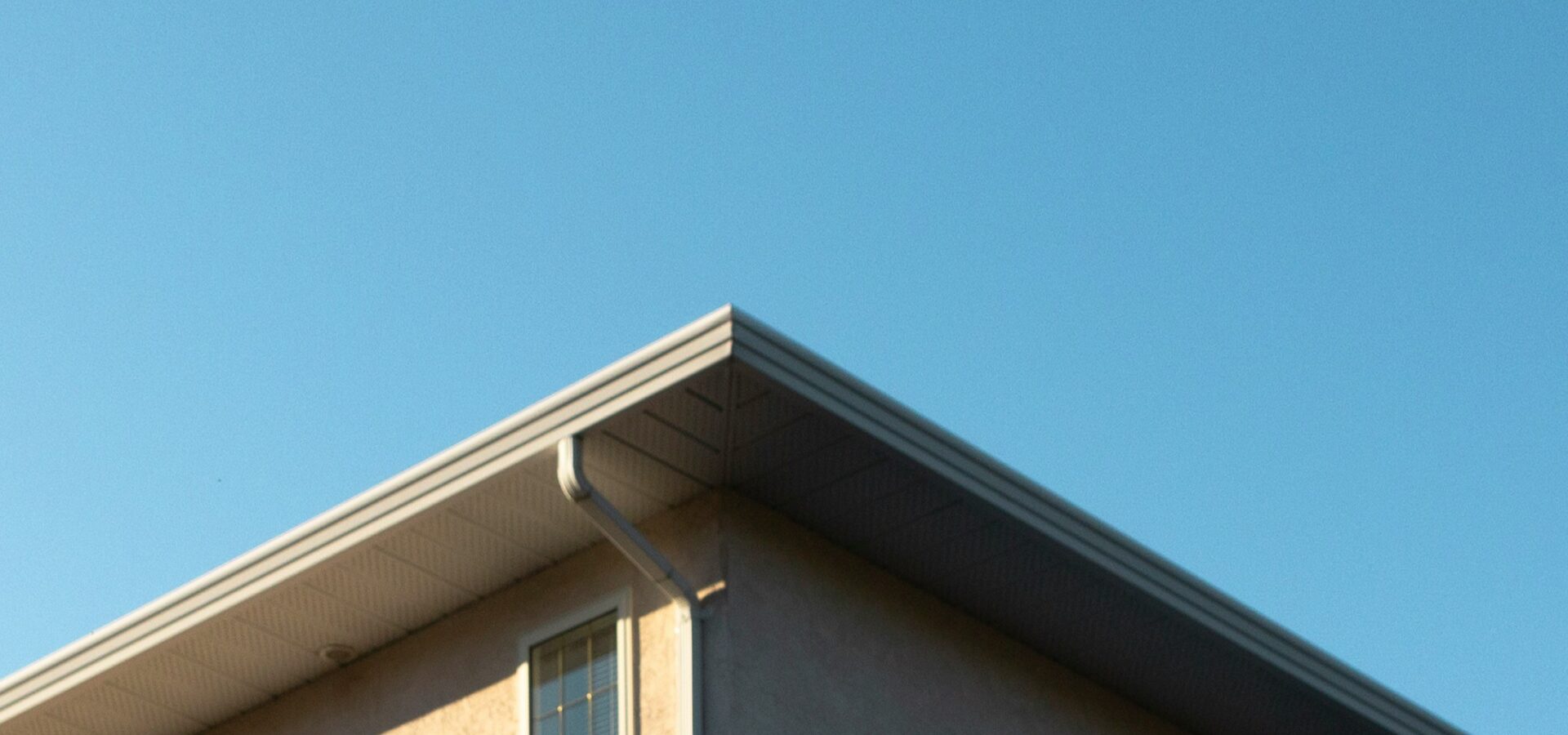
A lot of the work around here is within a mile or two of the sea. Worthing, Lancing and Goring, across to Hove and Brighton one way, and Littlehampton and Bognor the other. Roofline on those jobs does not behave the same way it does on a job in Horsham, and the difference often shows up two or three years after you have been paid and left site.
Here is what matters near the coast, and what does not.
What the sea does to a roofline
Salt is the main issue. Airborne chloride can travel a long way inland on the wind and settle on almost anything. It does not affect the uPVC, which is why people often assume a coastal job is no different. It attacks the steel instead: every fixing, every bracket screw and every pin holding the board in place.
Wind matters too, mainly because it brings the rain in sideways. Water that would run down a wall inland can be driven underneath an overhang and behind the gutter instead.
South-facing elevations on the coast also get an uninterrupted run of sunlight, with reflected light coming back off the water as well. That creates a level of heat and UV exposure that a shaded north-facing elevation two streets back will never see.
Fixings
This is the part you need to get right.
Galvanised or zinc-plated pins may be fine inland, but they are a false economy near the sea. The coating is sacrificial, and salt can eat through it quickly. You will not see the problem at handover. You will see it a couple of winters later, when brown streaks start running down a white fascia, and the customer will not care that the board underneath is still in good condition.
Stainless steel is the answer, but the grade matters. A2, sometimes referred to as 304, performs well under general outdoor exposure. A4, or 316, contains molybdenum, which gives it better resistance to chlorides. That is why A4 is the usual choice for marine and coastal environments. On an exposed seafront elevation, it is worth the extra cost. A couple of miles inland, A2 will usually be enough.
A coloured polymer head tells you nothing about the shank underneath, and the shank is the part that rusts. Ask what grade you are being supplied rather than making assumptions. Plenty of merchants stock one grade as standard and never mention what it is.
The same applies to gutter bracket screws. They are often overlooked until one of the brackets fails.
Dark colours on south elevations
Anthracite and black ash are popular. They also absorb far more heat than white, and on a south-facing coastal elevation they take the full force of it. The board moves more, which we cover in the next section, and the foil takes more UV exposure, so any fading will happen sooner on the elevation everyone sees.
The awkward part comes when you need to carry out a partial replacement. Replace half a run four years later using the original colour reference, and the new section can look noticeably newer. If you are quoting a job where the customer may want another section replaced later, explain that at the time rather than dealing with the complaint afterwards.
It is also worth checking what the warranty says about colour fastness, and whether coastal exposure is excluded. Some manufacturers do make that distinction.
Give the board room to move
uPVC expands and contracts as the temperature changes. Everyone knows it, but plenty of installers still fix it too tightly on a warm day and then wonder why it has bowed by August.
Dark boards on a sunny elevation move more than white boards in the shade, so the elevation that needs the most allowance is often the one where you are most tempted to pull everything tight for a neat finish. Leave the correct gap at the joints, do not overtighten the fixings, and pay attention to long uninterrupted runs where movement can build up. Fixing centres and expansion gaps vary between board ranges, so follow the manufacturer’s guidance for the product you are actually fitting rather than relying on a rule carried over from the previous job.
Don’t just match the gutter that was there
Half round is often used by default because it is what was already fitted. That does not mean it was the right choice.
Capacity depends on the size of the roof area draining into the gutter and the pitch of the roof. A steep roof moves water more quickly, and on a large roof with a steep pitch, standard half-round guttering may not have enough capacity. It may cope for most of the year, then overflow or overshoot during a heavy summer downpour. That becomes a callback which costs you a morning and earns you nothing. Deep-flow guttering exists for exactly this reason.
Bracket spacing matters as well. Wind loading on an exposed seafront elevation is not the same as it is inland, and reducing the centres beyond the standard spacing can be cheap insurance. The manufacturer’s guidance for the system will give you the correct figures.
What isn’t worth paying for
You do not need marine-grade materials throughout every coastal job. A property half a mile inland and sheltered by surrounding buildings does not face the same exposure as a seafront terrace, and pricing both jobs the same way could lose you the work to someone who has specified it more sensibly.
Upgrading the colour or finish on elevations nobody sees is unlikely to be money well spent. The same applies to over-specifying boards on a rear elevation that sits in permanent shade. Put the budget into the fixings and the gutter capacity instead. Those are the two areas most likely to cause callbacks.
Getting it into the quote
The additional cost is usually small. Better fixings and a step up in gutter capacity should not add much to the overall price of a full roofline job.
Have the conversation before you provide the quote rather than afterwards. Something along the lines of: this elevation is exposed, so we are upgrading the fixing grade because cheaper fixings can leave rust streaks down white boards within a couple of years in this area. Customers living near the coast have often already seen it on a neighbouring property. They understand the reason for the upgrade.
Where to get it
MLI’s trade counter is in Worthing, and much of the area it supplies is along the coast. Fascia, soffit, guttering and uPVC cladding are available, along with trims, fixings and silicones. Colours and finishes include woodgrain options. Guttering is supplied ready to fit. If you are removing old roofline, free skip use is available when it is replaced with MLI products.
Open Monday to Friday, 8am to 5pm, at Unit 1, Friar Walk, Worthing BN13 1BL. Call 01903 262636 or send a WhatsApp message to check stock before making the journey. Unsure which fixing grade the job needs? Ask when you place the order.
Trade supply across Worthing, Lancing, Littlehampton, Bognor Regis, Brighton, Hove, Horsham and Crawley.


